By Jay Gibson, Owner, Morson Painting & Renovations · November 13, 2026 · Fulshear, TX
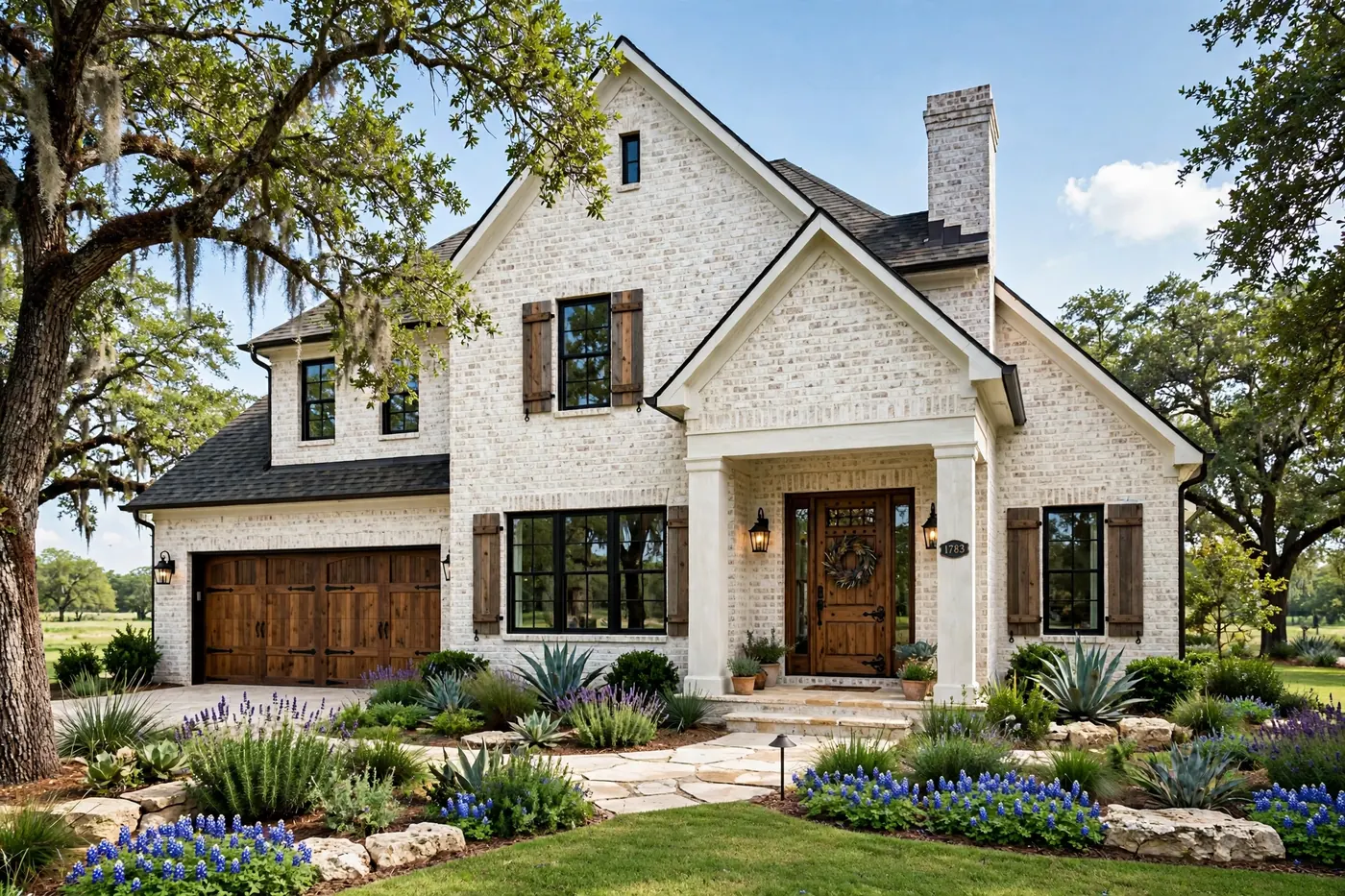
Brick is the default exterior across Fort Bend County, and a lot of it was installed in color blends nobody would choose today: orange reds, pink casts and busy multi tone mixes that date a house the moment you pull into the driveway. So the question arrives at our consultations almost weekly now, from Weston Lakes and Cross Creek Ranch to Cinco Ranch and Sienna. Should we paint the brick, or limewash it? Both are real answers. They're just different commitments, and the difference matters more than the color you pick.
What limewash actually is
Limewash is one of the oldest coatings in the world: crushed, burned limestone mixed with water and tinted with mineral pigment. It doesn't sit on top of brick like a film. It soaks into the pores of the masonry and, as it cures, turns back toward stone through a natural reaction with the air. That one fact explains almost everything about how it behaves. Because it becomes part of the brick rather than a skin over it, limewash stays vapor permeable, or breathable, in the true sense. Moisture that gets into the wall can dry back out through the finish. Fresh lime is also naturally alkaline, which makes the surface unwelcoming to the mildew and algae that love our shaded Gulf Coast walls. The look is soft and layered, with the brick texture and some of its color variation showing through, which is why people describe it as Old World or European. Our limewash page shows the finish up close.
What painting brick actually is
Painting brick means a masonry primer and a film forming exterior paint, usually a quality 100 percent acrylic made for masonry. Done properly, with the brick cleaned, efflorescence removed, mortar repaired and a breathable masonry system used, modern painted brick is a durable, solid, uniform finish in nearly any color you can imagine. It hides mismatched repairs, replaced brick and patchy mortar better than any other option, which is a real consideration on older homes. The honest caution is about the wrong version of this job: a non breathable coating, or paint laid over damp, dirty brick, traps moisture in the wall, and trapped moisture in Texas heat will push a finish off in blisters and sheets while it quietly works on the mortar. Product choice and prep aren't details here. They're the whole job, on brick more than on any other surface we paint. Our exterior painting page walks through how we prep masonry before a finish ever touches it.
The look, side by side
- Limewash: soft, matte and mottled. The brick reads through it, mortar lines stay visible, and no two walls look exactly alike. It flatters traditional, farmhouse and Mediterranean style homes especially well.
- Paint: solid, even and modern. The house becomes one confident color with crisp contrast at the trim. It's the stronger transformation, and the one that hides a brick blend you truly dislike rather than softening it.
One practical note: limewash color always dries lighter and softer than it looks in the bucket, and it can be wiped back while wet to let more brick show, so the finish is tuned on your wall, not just on a chip. Paint shows you the color you chose, exactly, which some homeowners strongly prefer.
How each one handles our humidity
Brick is a sponge by nature. It drinks storm rain and humid air, then needs to let that moisture go as it dries. This is where the two finishes part company. Limewash never blocks that drying, because there is no film to block it. A breathable masonry paint manages it well when the prep is honest. A cheap, sealed tight coating manages it badly, and our climate finds that mistake within a couple of seasons. If your home has shaded north walls that stay green, or brick that has shown white salty efflorescence, tell your painter before anyone talks color. Those are moisture stories, and they decide which finish belongs on your house.
How each one ages, and what upkeep really looks like
Limewash doesn't peel, chip or blister, because there is no film to fail. It wears the way stone wears: gradually thinning over the years into a softer patina, faster on the walls that take the hardest sun and rain. Many homeowners love that it relaxes instead of failing. When you want it refreshed, new limewash bonds straight onto the old, so a recoat is a simpler job than repainting a film.
Painted brick holds its full color for a long stretch, commonly 10 to 15 years with a quality system, and then it's a repaint: wash, prep any failing spots, and coat it again. In between, it asks for the same periodic gentle washing as any painted exterior in our pollen and humidity. What painted brick never does is stay maintenance free the way bare brick was. Painting adopts a schedule your brick didn't have before, and it's better to adopt it with open eyes.
The one way door
Here is the part we say slowly at the kitchen table. Paint on brick is effectively permanent. Paint soaks into the porous face of the brick, and removing it later means aggressive stripping or blasting that risks damaging the brick itself and never truly restores the original look. Limewash is the more forgiving commitment. In its first days it can be pressure washed back off if you change your mind, and across the years it continues to soften. Neither fact makes one finish better than the other. They make them different sized decisions, and you should size yours on purpose.
A word about HOAs and resale
Many neighborhoods in our area treat coating brick, by either method, as a major exterior change that needs architectural approval first, and a few prohibit it. Start the approval before you schedule anything, and bring samples, because lead time on an answer is the most common avoidable delay we see. On resale, updated brick is a genuine selling feature for many buyers in Fulshear and Katy, and a smaller group of buyers specifically hunts for original brick. That split is exactly why the permanent option deserves the longer think.
So which one fits your house?
- Choose limewash if you like your brick and want it softened, lightened and given character, if breathability matters for your walls, and if a finish that relaxes gracefully sounds better than one that must be repainted on schedule.
- Choose paint if the brick blend itself is the problem, if you need to hide repairs and mismatched masonry, or if you want one exact, solid, modern color and accept the repaint cycle that comes with it.
- Choose neither, yet if you're planning to sell soon and your brick is in good shape. Bare brick is the most maintenance free exterior there is, and a buyer who wants a coating can always add one.
Questions we hear about brick
Can limewash go over painted brick? No. Limewash needs bare, absorbent masonry to soak into and calcify. Over paint it has nothing to grab and won't bond. Brick that has already been painted needs the paint stripped back to bare brick first, or it should simply be repainted.
How long does limewash last here? It doesn't fail all at once. It slowly thins over the years into a softer patina, faster on walls that take the most sun and storm rain. When a refresh is wanted, new limewash bonds directly to the old, so recoating is simpler than repainting a film.
Does limewash only come in white? White and soft off whites are the most common, but limewash is tinted with mineral pigments and comes in a range of earthy shades, from warm sand and greige to soft gray and clay tones. The color always reads a little softer than a paint chip, because the brick shows through it.
Will painting my brick hurt its value? It depends on the buyer, which is why the decision deserves care. Updated brick is a selling feature for many buyers in our area, while some specifically want original brick. Paint is effectively permanent, so the safest rule is to paint only when you're confident you want the new look for the long term.
If you're standing in your driveway looking at brick you're tired of, we're glad to stand there with you. Call 281-505-7525 for a free consultation and we'll talk through both finishes on your actual walls, in your actual light, with samples, and leave you a personalized quote for the one that fits. When you say yes, a project manager calls to schedule, a 20 percent down payment is due by the day the project starts for materials, and we finish with a walkthrough together. That's how we work at Morson Painting and Renovations, transforming spaces and brightening lives across Fulshear, Katy, Sugar Land and Fort Bend County.
← More from the Morson blog · Get a free quote · Meet Jay